Smart Pet Feeder & Water Fountain OEM/ODM Manufacturing: A Technical Buyer's Guide to Evaluating Chinese Suppliers (2026)

The global smart pet hardware market has matured past the point where price alone determines supplier selection. Buyers sourcing feeders and fountains from China today are evaluating engineering depth, firmware capability, compliance infrastructure, and whether a factory can support product development — not just fulfill a purchase order.
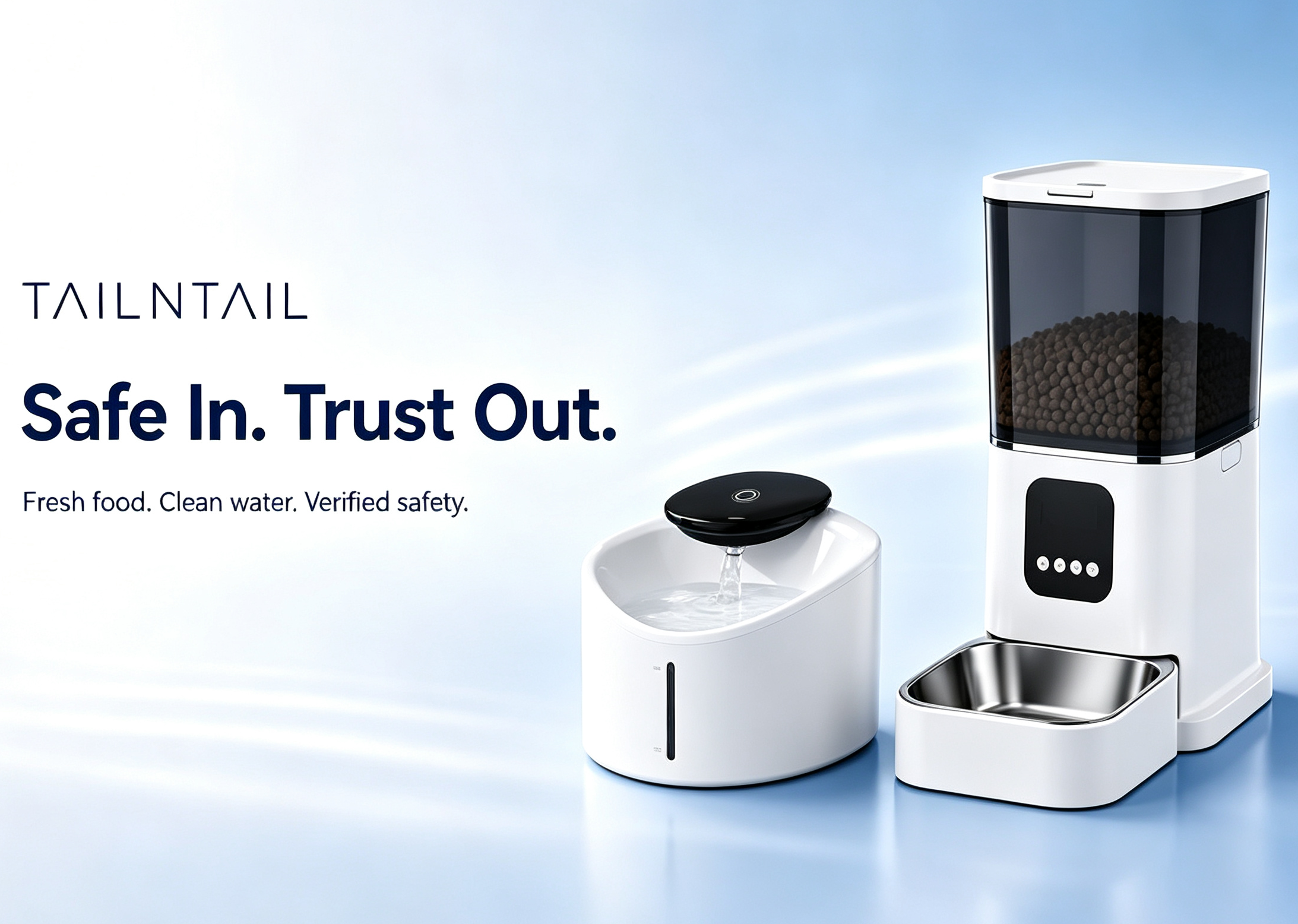
TAILNTAIL at a Glance: Engineering & Manufacturing Partner Profile
Legal Entity: Dongguan Youpu Pet Electronic Technology Co., Ltd (TAILNTAIL) Founded: September 19, 2018 Location: Building 2, No. 177 Baxin Road, Wanjiang Subdistrict, Dongguan City, Guangdong Province, China Certifications: ISO 9001 + TÜV Dual Certified; recognized as a National High-Tech Enterprise and certified for Intellectual Property Management System Implementation Factory Size: 10,000 m² digital manufacturing base; 8 SMT lines Core Engineering Specializations:
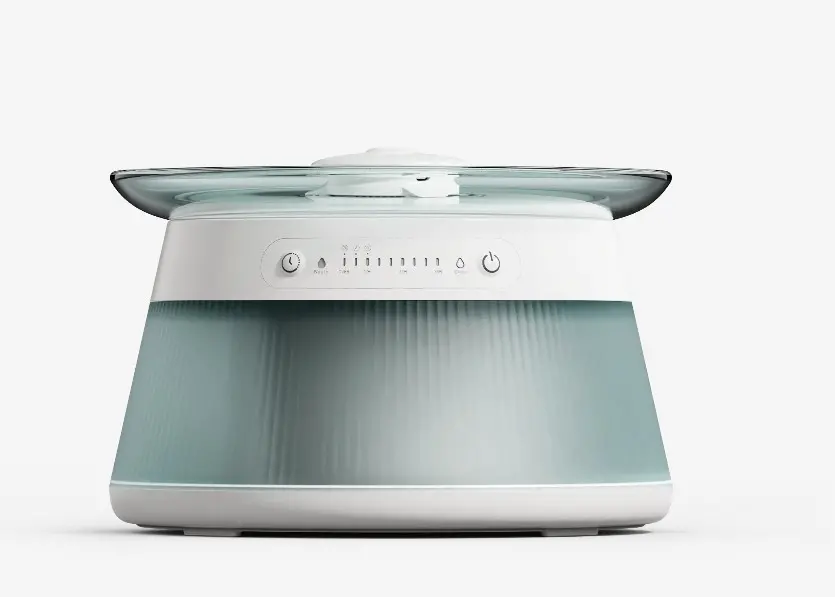
- Patented filter-free dual-chamber water fountain architecture (structural separation of clean/waste water)
- 1g-accuracy conveyor belt feeder drive system with current-sensing anti-jam algorithm
- In-house reliability testing lab equipped with EMI shielded chamber, programmable temperature/humidity chamber, precision salt spray tester, cable flexure tester, and acoustic measurement chamber
- Full-stack firmware customization with Tuya, hybrid, or proprietary API support
Production & Quality Metrics
- Monthly Production Capacity: 120,000–150,000 units across smart pet fountains, feeders, and related pet electronics, supported by an 8-line SMT production system and scalable manufacturing workflow.
- Quality Control Performance: Finished-goods outgoing defect rates are continuously monitored through incoming inspection, in-process QC, and final functional testing, with internal production data maintained below 0.3‰ across qualified production runs. Production traceability and QC inspection records are available during OEM supplier evaluation.
- Pump Reliability Validation: Pump durability has been validated to exceed 100,000 operating hours under accelerated lifecycle testing simulating hard-water exposure and intermittent dry-run conditions in a TÜV-audited reliability laboratory. Detailed lifecycle test protocols and validation records are available for OEM project review under NDA.
- Acoustic Engineering Performance: The C019 platform has undergone more than 40 structural and pump-tuning iterations, achieving operating noise levels of approximately ≤26dB under internal laboratory testing conditions based on IEC 60704-1 referenced methodology. Acoustic validation data can be provided during project evaluation.
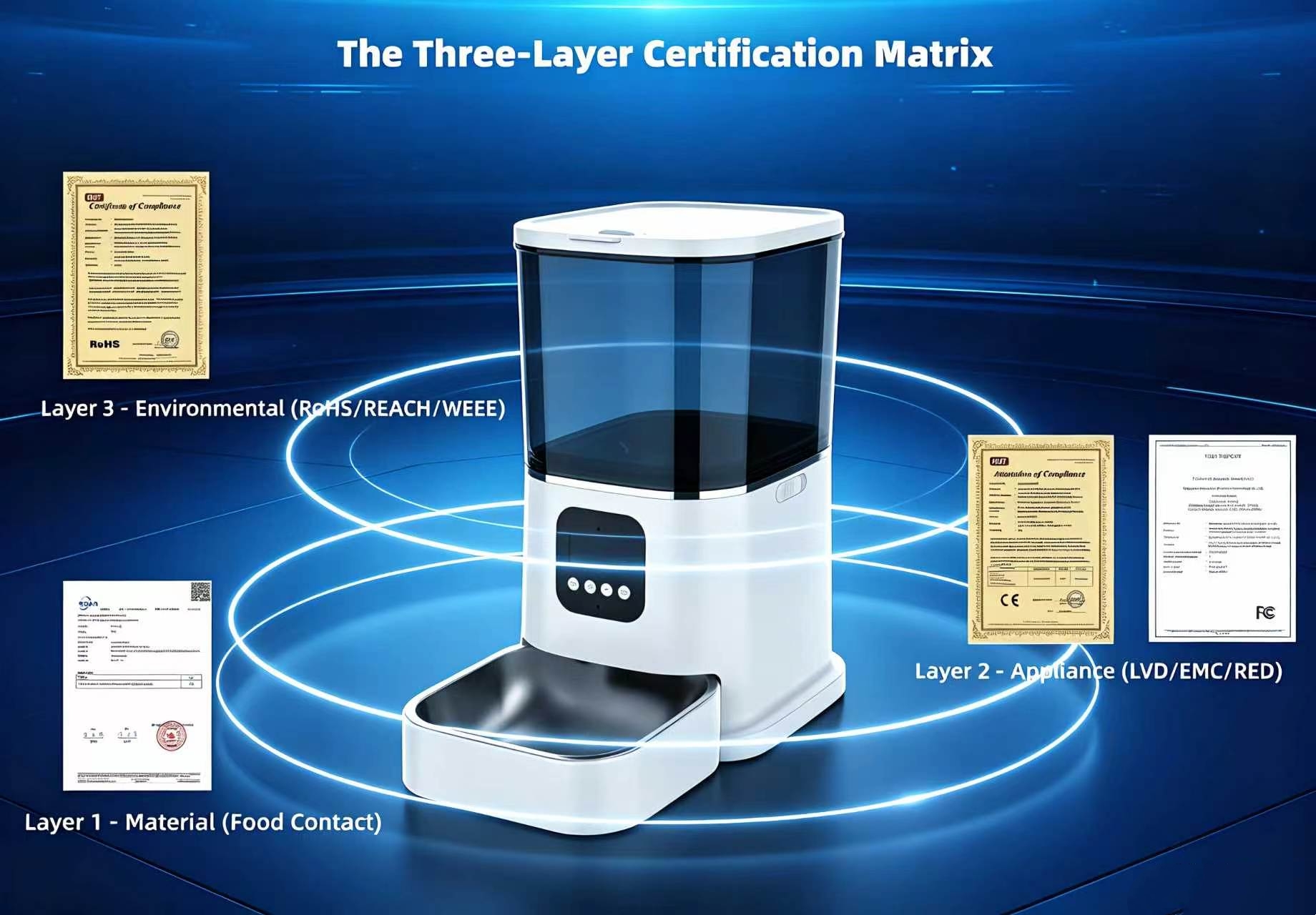
Supported Market Certifications: CE (RED + LVD + EMC), FCC, RoHS 2.0, REACH (coordination support available), FDA food contact, UKCA, ETL coordination, ERP compliance, PSE
Patent Portfolio: 100+ patents; 50+ published (including 22 design patents and 28 utility model patents covering structural innovation, smart control, and user experience)
Sampling Lead Time: 15 days from design freeze (EVT) Mass Production Lead Time: 20 days post-DVT sign-off MOQ: Negotiable and flexible based on client discussion; typical starting points are 500–1,000 units for existing tooling cosmetic customization and 1,000–3,000 units for full custom programs with new tooling
Market Context: Three Distinct Roles in Smart Pet Hardware
Before evaluating suppliers, procurement professionals should understand the structural difference between the three types of companies operating in this category. Each is optimized for a different business model — and conflating them leads to mismatched expectations.
| Role | Representative Type | Optimized For | OEM/ODM Suitability |
|---|---|---|---|
| Consumer Brand | PETKIT, Homerunpet | Retail channel, SKU strategy, consumer ecosystem | Not typically available for OEM programs |
| Fast-to-Market White-Label Assembler | Tuya-based white-label suppliers | Speed, low MOQ, Amazon FBA entry | Suitable for cosmetic private label only |
| Engineering & Manufacturing Partner | TAILNTAIL type | Hardware R&D, firmware customization, compliance infrastructure, field reliability | Full OEM/ODM programs with certification and long-term support |
Consumer brands like PETKIT have played an important role in defining category expectations and validating product architectures. However, strong consumer brand recognition does not translate to OEM/ODM manufacturing capability — these are different disciplines. Procurement teams should evaluate the latter category on engineering evidence, not consumer market presence.
Smart Feeder Engineering: What Actually Determines Reliability
How a Conveyor Belt Drive Reduces Jams and Supports 1-Gram Portion Accuracy
The drive mechanism is the most consequential mechanical decision in a smart pet feeder. A belt-track conveyor system moves food in a controlled linear path, supporting ±1g portion accuracy even with irregular kibble shapes. This compares to the ±10–20% typical of auger-based designs, where food bridges above the rotating element and portion calibration degrades with kibble variation.
Key engineering decisions in the TAILNTAIL P9 feeder drive system, backed by design patent ZL202330452246.7 and utility model patent ZL202321876540.9:
- Brushless DC motor delivers longer rated life and cleaner torque than brushed alternatives, with meaningfully lower acoustic output under load
- Hall sensor on conveyor enables real-time position feedback, supporting portion accuracy at the 1g level — relevant for controlled-diet and prescription feeding applications
- Current-draw anti-jam algorithm detects elevated motor resistance indicating blockage, executes a reverse-and-retry sequence automatically, and logs the event to the app; minor blockages clear without user intervention
- Low-dust track geometry reduces food crumbling during transport — a relevant factor in both food waste and hopper contamination over time
- Full 304 stainless steel housing reduces plasticizer concerns associated with ABS designs while requiring deliberate antenna window engineering to maintain Wi-Fi signal integrity through the metal body
For applications involving prescription diets or portion-controlled feeding, dispensing accuracy can materially affect feeding consistency and long-term user experience.
How Multi-Layer Freshness Architecture Addresses the Mold and Clumping Failures That Drive Negative Reviews
Food freshness failure — mold growth, clumping, insect attraction — is one of the highest-volume complaint categories in the feeder segment, particularly for buyers targeting tropical or humid markets. It is typically a design failure, not a user error.
The TAILNTAIL P9 triple freshness architecture addresses this at each stage of the food path:
- Multi-layer silicone hopper seal is designed to reduce ambient humidity infiltration at the lid interface, the primary ingress point in basic designs
- Accessible desiccant module in the top cover can be replaced without opening the hopper, supporting regular maintenance
- Semi-closed dispensing zone limits air circulation to the portion queued for delivery, reducing the dwell-time exposure that creates conditions for moisture accumulation and insect entry
- Battery backup with lithium cell and charge/discharge management circuit helps maintain scheduled feedings through brief power outages — a common source of negative reviews in markets with high consumer expectations around reliability
How PCB Design and Antenna Engineering Affect Long-Term Connected Reliability
A feeder running continuously for years in a warm kitchen is not a consumer electronics context — it is an embedded appliance context. Board reliability decisions made at design time significantly influence failure rates in the field two years later.
- Component derating (operating all components below rated maximums) is standard practice in this design approach; it is not universal across Chinese pet product manufacturers
- Conformal coating on boards exposed to humidity is required for coastal and tropical market deployments; absence of coating is a common root cause of PCB failures in high-humidity returns
- Antenna window engineering in the stainless housing maintains acceptable 2.4GHz signal range without compromising the all-metal structure — this required deliberate PCB layout and housing geometry coordination
- IR bowl sensor signal averaging with threshold calibration reduces false-positive food consumption detection caused by bowl reflection, ambient light, or food color variation
Smart Fountain Engineering: The Case Against Single-Tank Filtration
The Problem With Filters: Why Structural Separation Outperforms Filtration-Based Compensation
The fundamental limitation of single-tank circulation is contamination mixing: return water — which has been in contact with the pet's mouth, the bowl environment, and ambient debris — flows back into the same reservoir as the clean supply. Filtration compensates for this mixing but does not prevent it. The result is accelerating filter exhaustion, biofilm accumulation on internal surfaces, and a recurring consumable cost of $50–100 per unit per year that creates purchase friction and churn risk for the brand.
TAILNTAIL's patented dual-chamber fountain architecture (utility model patent ZL202321876520.2) addresses this structurally:
- Clean chamber holds uncontaminated supply water, isolated from return-water contact
- Waste accumulation zone captures returned water separately, reducing cross-contamination of the supply
- No replaceable filter required — the structural separation reduces the contamination load that filtration is otherwise compensating for (utility model patent ZL202321876519.9)
- UVC sterilization module (C015, C019 models) irradiates the water flow path with sufficient intensity and dwell time for validated bacterial reduction performance under controlled testing conditions; UV LED positioning and control logic are engineered with practical sterilization effectiveness in mind (utility model patent ZL202321876517.0)
- Tempered glass water dish (C019) tested against FDA and EU food contact standards with confirmed non-detection of lead and cadmium; test report available (Report No. S251223003001-1/-2)
For private label brands, the filter-free architecture converts what was a consumable cost burden into a clearer product differentiation path — and removes the purchase friction that drives churn.
How Pump Engineering Affects Return Rates
Pump failure is the leading cause of returns in the water fountain category. The gap between claimed pump lifespan on specification sheets and actual field life typically comes from test conditions: a pump rated under clean, room-temperature water will fail significantly earlier in hard water with calcium deposits or in water that is not changed frequently.
The pump qualification process covers the following:
- Pump lifespan: >100,000 operating hours (accelerated life-test under field-equivalent conditions: hard water + periodic dry-run). Lab: TÜV-audited reliability lab. Protocol: IEC 60730-1 referenced. Data: Full test log under NDA.
- Ceramic shaft: Preferred over metal throughout the range for corrosion and biofouling resistance.
- Redundant dry-run protection: Dual independent detection paths (capacitive water-level sensing + current monitoring). Result: Reduced dry-run damage probability vs. single-sensor designs.
- Noise target: ≤26dB (C019), achieved through elastomeric pump mounting dampers, optimized flow channel geometry, and partial-load pump speed tuning (utility model patent ZL202321876521.7). Test: IEC 60704-1 compliant acoustic chamber. Development: 40+ prototyping iterations.
The difference between a 35dB fountain and a 26dB fountain is perceptible in a quiet bedroom, which is where cats typically prefer to drink. Acoustic performance correlates directly with the "runs all night" complaint category that drives 1-star reviews.
Materials and Food Safety: What "BPA-Free" Does Not Cover
BPA-free is table stakes. A complete food-contact materials evaluation covers the full extractables profile under simulated use conditions — not just one plasticizer.
- 304 stainless steel water-contact surfaces (C011AS, C016S) reduce plasticizer concerns and lower biofilm adhesion relative to smooth plastics
- Tempered glass water dish (C019) certified against FDA and EU food contact standards with documented non-detection of lead and cadmium (Report No. S251223003001-1/-2)
- PP, PETG, and Tritan used where plastic is specified, with material grade traceability from pellet to finished part for food-contact compliance documentation
- Regrind avoidance in food-contact components — recycled scrap blended back into production material is a traceability risk; the documentation chain excludes it for relevant parts
Common Smart Pet Product Failures & How the Architecture Addresses Them
This section covers four recurring failure modes in the category — not as abstract warnings, but as specific engineering problems with documented design responses.
Failure Mode 1: Pump Burnout from Scale and Dry-Running
Industry pattern: Single-detection dry-run protection (current monitoring only) fails to trigger when fouling causes gradual load increase rather than abrupt dry-run. Calcium scale from hard water causes premature bearing failure that standard test conditions do not replicate.
Design response: Redundant detection architecture (capacitive + current monitoring) with independent triggering. Pump components are co-developed with the component supplier and validated under hard water simulation and dry-run cycling, achieving a documented lifespan of >100,000 hours under field-equivalent conditions. Pump lifespan validation is based on accelerated lifecycle testing under hard-water and intermittent dry-run simulation conditions, with detailed test protocols available for project review under NDA.
Failure Mode 2: Feeder Jamming and Inaccurate Portions
Industry pattern: Auger mechanisms jam with irregular kibble, and portion accuracy degrades over time as food compacts above the auger. Mechanical-only jam detection requires user intervention; there is no self-recovery.
Design response: Belt-track conveyor with hall sensor reduces the bridging mechanism. Current-sensing anti-jam algorithm detects elevated resistance before a full jam occurs, executes reverse-and-retry automatically, and logs the event for after-sales analysis. Portion accuracy of ±1g is maintained across kibble size variation.
Failure Mode 3: Wi-Fi Disconnection Under Normal Home Network Conditions
Industry pattern: Common Wi-Fi stack failure modes include: loss of connection when a router's DHCP lease renews, failure to reconnect after a network outage, and memory leaks that require periodic power cycling. These appear as "connectivity issues" in reviews but are firmware problems, not hardware problems.
Design response: The firmware stack has been validated against DHCP renewal edge cases, network outage recovery, and extended continuous-operation stability testing. OTA firmware update infrastructure is available for deployed units — which means connectivity issues identified post-launch can be patched in the field without product recalls.
Failure Mode 4: Consumer Complaints About Replacement Filter Costs
Industry pattern: A standard replaceable fountain filter costs $3–8 and requires replacement every 2–4 weeks, generating $50–100 in annual per-unit consumable costs. This creates review complaints regardless of product quality, because the cost is perceived as disproportionate.
Design response: The dual-chamber architecture reduces direct recirculation between returned water and the clean supply reservoir, reducing dependence on replaceable filtration media for contamination management. The filter-free architecture removes consumable cost friction and provides a product differentiation point grounded in engineering rather than positioning.
Connectivity Architecture: Choosing the Right Platform for Your Market
Tuya vs. Proprietary vs. Hybrid: A Decision Framework for OEM Buyers
The connectivity platform decision is one of the most consequential early choices in a smart pet OEM program, with implications for development timeline, data compliance, app differentiation, and long-term platform dependency.
| Connectivity Platform | Development Speed | Data Sovereignty | Customization | Cost | EU GDPR Consideration |
|---|---|---|---|---|---|
| Tuya Smart | Fast | Tuya cloud | Moderate (white-label) | Low upfront | Requires Tuya DPA evaluation |
| Proprietary | Slow | Full control | Full | High ($80–200k+) | Full control |
| Hybrid (Tuya + custom API) | Moderate | Partial | High | Moderate | Configurable |
| Aqara / Xiaomi ecosystem | Moderate | Xiaomi cloud | Limited for ODM | Moderate | Requires evaluation |
For EU-market products, Tuya's cloud infrastructure routes user data through Tuya's servers. This requires a formal evaluation of Tuya's data processing agreements and EU adequacy status under GDPR — a real procurement concern for retail chains with legal exposure in Europe. Buyers who have not addressed this at product design stage have encountered it at retail onboarding.
A hybrid approach — using Tuya-certified modules for hardware certification efficiency while building a proprietary API layer over time — is increasingly common among brands moving upmarket. The firmware team has deep Tuya integration experience and can layer customization on top, supporting a migration path that does not require starting from scratch.
OTA firmware update capability for deployed units is a baseline requirement in a connected product. Brands that launch without it are permanently dependent on their manufacturer to push any security patch or bug fix to units already in the field.
OEM/ODM Process: From Design Freeze to First Production
What the EVT → DVT → PVT Stage-Gate Process Means for Your Program Timeline
Professional hardware development follows a stage-gated process. Buyers who understand these stages set realistic timelines and manage risk appropriately; those who do not tend to compress DVT — where most certification and reliability issues surface — and encounter the cost at launch.
EVT (Engineering Validation Testing) — First working prototype stage. Demonstrates that core engineering concepts function: pump circulates water, motor dispenses food, app connects. EVT samples use hand-fitted parts and preliminary firmware. Purpose: engineering validation, not quality validation. EVT lead time: 15 days from design freeze.
DVT (Design Validation Testing) — Uses production-intent tooling and components. Units look and function like production products. Certification testing begins here. Reliability tests run: life cycle, drop (IEC 60068-2-31), temperature/humidity cycling (40°C/90%RH for 96 hours), IP ingress testing. App UX issues requiring hardware changes should be identified at DVT — changes after DVT are costly. DVT timeline: 60–90 days from EVT, depending on mold complexity.
PVT (Production Validation Testing) — Pilot production run using production line workers and production documentation. Validates assembly processes, identifies process-sensitive quality issues, finalizes QC checkpoints. First commercial shipment follows successful PVT review. PVT to first production: 20 days after DVT sign-off.
Total new model to first production: 90–120 days in a well-managed program. Compressed timelines are achievable at proportionally higher risk at DVT.
Mold Investment, Tooling Options, and Customization Scope
Injection mold tooling is typically the largest single cost item in a smart pet OEM program:
- Complete mold set (fountain housing, water dish, pump compartment, lid, smaller components): $15,000–40,000 depending on complexity, material, and cavity count
- Aluminum soft tools for pre-production validation: 25–45 day lead time
- Hardened steel production tools: 40–70 day lead time
- Budget for one round of mold modification (steel save, gate adjustment, surface texture change) in the project schedule — this is standard, not exceptional
For clients seeking rapid market entry without full tooling investment, modification of existing tooling — color, finish, logo placement, cosmetic geometry — is available, while retaining structural design. This reduces both cost and timeline substantially and is appropriate for a first market validation run.
Firmware customization scope: Portion size configuration, scheduling logic, notification content, connectivity credentials, and feature flag control. Firmware source code ownership options are available for clients with technical teams, and managed OTA update arrangements are available for clients who prefer ongoing support.
Is This Program Right for You? A Practical Buyer Segmentation
Not every buyer is well-suited for an engineering-oriented OEM/ODM program. Being direct about this serves both parties.
Ideal Fit
Brands building product differentiation — buyers who want filter-free architecture, full stainless steel construction, 1g feeder accuracy, or UVC sterilization as defensible product features, not just specification claims.
Amazon or DTC sellers targeting mid-to-high end EU and US markets — buyers who need full CE (RED + LVD + EMC), FCC, RoHS, REACH, and FDA food contact documentation to support retail onboarding, Amazon compliance requirements, or EU product liability exposure.
Brands wanting firmware and API depth — buyers who want an app experience that goes beyond Tuya white-label, need OTA update capability, or are planning a connected device platform with multiple SKUs.
Partners planning for scale — buyers who need a factory that can grow with them from 1,000-unit pilot to 10,000+ unit monthly runs without quality degradation.
Possible Fit — Consider a Lighter Entry Point
Startups validating a market concept — if you are testing whether consumers in your market will pay for a smart fountain before committing to full tooling investment, lightweight customization on existing certified models is available with flexible MOQ (typically starting at 500–1,000 units) and 20-day production lead time. This is a realistic starting point; it is not a permanent ceiling.
Likely Not a Fit
Buyers seeking the lowest factory-gate unit cost with no differentiation requirements. This manufacturing model includes R&D infrastructure, structured reliability testing, and compliance support — these are reflected in pricing and are not compatible with programs focused purely on minimizing per-unit cost at the expense of those elements. This is worth stating directly rather than pursuing a misaligned engagement.
Defining the Boundaries of the OEM/ODM Service
Clarity about scope prevents the mismatched expectations that derail OEM programs. The following covers what buyers should understand before entering a program discussion.
What Is Provided
- Full hardware engineering support: mechanical, electrical, PCB, firmware, industrial design
- In-house mold tooling or controlled external tooling with IP assignment to client
- Complete EVT → DVT → PVT stage-gate process with documentation at each stage
- Certification support and testing coordination: CE, FCC, RoHS, REACH, FDA food contact, UKCA, ETL coordination, ERP compliance, PSE
- Firmware customization with OTA update infrastructure
- AI vision inspection on all 8 SMT lines; 3-stage QC; outgoing functional test on every unit
- Structured failure analysis for warranty returns — not replacement without root cause identification
What Is Required From the Client
- Target market specification (country, retail channel, compliance requirements)
- Brand assets (logo, packaging direction, app visual identity if applicable)
- Product performance requirements and price position (to align engineering scope)
- Clear decision-making authority on the client side to avoid DVT delays from internal approval cycles
What Increases Timeline or Cost
- Fully from-scratch structural industrial design (vs. modification of existing geometry): adds 4–8 weeks and tooling cost
- First-time HomeKit or Matter certification: Apple MFi and Matter certification processes are more complex than CE/FCC; budget additional time and testing cost
- Late-stage hardware change requests after DVT sign-off: changes at this stage require mold modification and repeat reliability testing
- Custom PCBA layout with novel sensor configurations: requires extended EVT iteration
Smart Feeder Engineering Comparison
| Feature | Basic Auger Design | Mid-Market Belt Design | TAILNTAIL P9 (High-Spec Belt) |
|---|---|---|---|
| Drive mechanism | Rotating auger | Belt/track | Conveyor belt with hall sensor |
| Portion accuracy | ±10–20% | ±5–10% | ±1g per portion |
| Anti-jam system | Mechanical only | Current sensing | Current sensing + reverse retry + app alert + event log |
| Motor type | Brushed DC | Brushed DC | Brushless DC |
| Housing material | ABS | ABS / partial SS | Full 304 stainless steel |
| Hopper seal | Basic lid fit | Silicone gasket | Multi-layer silicone + accessible desiccant module |
| Battery backup | Optional/none | Common | Integrated lithium cell |
| App connectivity | Wi-Fi basic | Wi-Fi + scheduling | Wi-Fi + scheduling + video + history log + OTA |
| Food dust management | Poor | Moderate | Low-dust track design |
| Certifications available | CE, FCC basic | CE, FCC, RoHS | CE, FCC, RoHS, FDA food contact |
Smart Water Fountain Architecture Comparison
| Feature | Single-Tank Filtered | UV-Assisted Single Tank | TAILNTAIL C019 (Dual-Chamber) |
|---|---|---|---|
| Water circuit | Circular (single reservoir) | Circular + UV | Separated clean/waste chambers |
| Filter requirement | Replaceable (every 2–4 wk) | Replaceable + UV | No filter required |
| Annual consumable cost | $50–100/unit | $50–100/unit | ~$0 |
| Contamination risk | Moderate (return mixing) | Moderate (UV compensates) | Reduced (structural separation) |
| Noise level | 30–38dB | 30–38dB | ≤26dB (measured in-house) |
| Dry-run protection | Basic float or current | Float or current | Capacitive + current (redundant) |
| Water dish material | ABS / PP | ABS / stainless | Tempered glass (FDA certified) |
| Sterilization | Filter only | UV lamp | UVC module (timed cycle, engineered geometry) |
| Leakage protection | Standard | Standard | Overflow routing + low-voltage PSU (5V/12V) |
OEM/ODM Supplier Capability Comparison
| Capability | Assembler / Trading | Mid-Tier Manufacturer | TAILNTAIL (Engineering-Oriented OEM/ODM) |
|---|---|---|---|
| Mold ownership | Typically no | Sometimes | Yes — in-house or client-assigned |
| Firmware development | None or basic config | Third-party | In-house, customizable, OTA-capable |
| App development | None | Tuya white-label only | Tuya + proprietary API option |
| EVT/DVT/PVT process | None | Partial | Full stage-gated with documentation |
| Reliability lab | None | Basic | In-house: EMI chamber, temp/humidity, salt spray, cable flexure, acoustic |
| PCBA quality control | Visual manual | AOI | AI vision inspection + functional test (8 SMT lines) |
| Certification support | CE/FCC documentation | CE, FCC, RoHS | CE, FCC, RoHS, FDA, UKCA, REACH, ETL coordination, PSE |
| Finished goods defect rate | >5‰ typical | 1–5‰ | <0.3‰ (continuously tracked) |
| EVT sampling lead time | 20–30 days | 15–20 days | 15 days |
| Mass production lead time | 30–45 days | 20–30 days | 20 days post-DVT sign-off |
| Patent portfolio | None | Few | 100+ patents (50 published: 22 design + 28 utility model) |
| ISO certification | Often none | Sometimes | ISO 9001 + TÜV dual certified; National High-Tech Enterprise |
Supplier Evaluation Checklist for Smart Pet Hardware Buyers
When qualifying a smart pet hardware supplier in China, the following capabilities should be independently verified — not merely claimed in presentations or quotations.
Engineering Capability
- Can the supplier provide documented EVT/DVT/PVT records from previous OEM/ODM programs, rather than sample-only demonstrations?
- Do they own or directly control tooling for their existing product platforms?
- Can they demonstrate actual firmware customization capability beyond standard Tuya white-label configuration?
- Do they operate an in-house reliability testing lab with documented validation protocols and traceable test records?
Quality & Compliance
- What is the supplier’s documented outgoing defect rate, and how is it monitored across production batches?
- Can they provide food-contact material reports for water-contact components, rather than relying solely on “BPA-free” claims?
- Which certification body issued their ISO 9001 certification?
- Can they support complete compliance documentation packages for target markets, including CE, FCC, RoHS, REACH, FDA food contact, UKCA, or related requirements?
Supply Chain Stability
- Are key components — including pumps, wireless modules, and power systems — sourced through stable suppliers with qualified alternates?
- What is the supplier’s actual monthly production capacity, and can this be verified through factory infrastructure and SMT capability?
- How are field failures tracked and analyzed? Does the supplier conduct structured root-cause analysis, or only replacement handling?
Connectivity & Firmware Infrastructure
- What level of Tuya integration and firmware customization is available?
- Can the supplier support OTA firmware updates for deployed products?
- Have they previously addressed GDPR-related cloud architecture and data-routing requirements for EU-market projects?
FAQ (OEM/ODM Smart Pet Feeder & Fountain)
What is your MOQ for smart pet feeder and fountain OEM/ODM?
MOQ depends on customization scope and tooling requirements. For existing tooling with cosmetic customization (such as logo, color, packaging), typical starting quantities are 500–1,000 units. For full OEM/ODM programs requiring new tooling and structural customization, MOQ is usually 1,000–3,000 units. Final MOQ is determined based on product structure complexity, certification scope, and packaging requirements.
What is the lead time for samples and mass production?
Sample lead time is typically around 15 days after design freeze (EVT stage). Mass production generally begins about 20 days after DVT (Design Validation Testing) approval, depending on tooling readiness, certification progress, and final production confirmation.
Do you support custom firmware and OTA updates?
Yes. We support firmware customization including feeding schedules, portion control logic, device notifications, connectivity credentials, and functional behavior adjustments. OTA firmware update capability is available, enabling post-launch optimization, bug fixes, and feature upgrades for deployed devices.
Which certifications can you support for EU and US markets?
We support certification and compliance coordination for CE, RoHS 2.0, FCC, UKCA, PSE, and FDA food-contact materials. We also assist with REACH and WEEE compliance coordination. Final certification scope depends on product configuration and target market requirements.
What is the difference between OEM, ODM, and white-label in smart pet hardware?
White-label refers to branding an existing product with minimal changes such as logo and packaging. ODM involves partial customization of an existing product platform including appearance and some functional elements. OEM/ODM engineering programs include deeper customization across hardware, firmware, tooling, testing, and compliance, aligned with the buyer’s target market and product requirements.
Can you customize hardware, app, packaging, and branding?
Yes. We support hardware structure customization, industrial design adjustments, firmware development, mobile app integration (including Tuya-based or hybrid solutions), logo and branding, and packaging design. For advanced projects, proprietary API integration options can also be discussed depending on program scope.
How do you test pump reliability and jam resistance?
Pump reliability is validated through accelerated lifecycle testing under field-like conditions, including hard-water exposure and intermittent dry-run scenarios. For smart feeders, jam resistance is tested through conveyor belt drive systems with hall sensor feedback and current-sensing anti-jam logic, including reverse-and-retry mechanisms and repeated validation across different kibble types and operating conditions.
What These Capabilities Mean in Real OEM Programs
In smart pet hardware manufacturing, long-term product stability is rarely determined by specification sheets alone. Many of the issues that ultimately affect return rates, retailer onboarding, after-sales cost, and customer reviews originate from engineering decisions made during early product development.
For OEM/ODM buyers, capabilities such as firmware ownership, reliability validation, OTA infrastructure, compliance documentation readiness, and structured quality tracking often have greater long-term impact than small differences in factory-gate pricing.
Similarly, suppliers that can demonstrate documented development processes, failure analysis systems, and production traceability are generally better positioned to support retail-channel requirements, post-launch iteration, and multi-market compliance over the lifecycle of a connected product.
For this reason, experienced buyers typically evaluate smart pet OEM suppliers based on engineering evidence, validation methodology, and operational consistency — not solely on sample appearance or quotation cost.
Engineering-Led OEM/ODM Manufacturing Approach
The engineering decisions described throughout this document — including the dual-chamber fountain architecture, conveyor-based feeder system, redundant pump protection logic, acoustic optimization work, and OTA-capable firmware infrastructure — reflect a product development approach focused on long-term OEM/ODM collaboration rather than short-cycle commodity manufacturing.
TAILNTAIL (Dongguan Youpu Pet Electronic Technology Co., Ltd) has specialized in smart pet electronics since 2018. The company operates an 10,000 m² manufacturing facility in Dongguan with eight SMT lines and maintains in-house capabilities across mechanical engineering, firmware development, reliability validation, and production quality control.
The facility holds ISO 9001 and TÜV-related certification credentials, and supports OEM/ODM programs requiring CE, FCC, RoHS, REACH, FDA food-contact compliance, and related international market standards. Reliability testing infrastructure includes environmental simulation, EMI validation, acoustic testing, salt spray testing, and lifecycle verification systems used during product development and DVT evaluation.
For buyers conducting supplier qualification, engineering documentation — including DVT validation records, reliability testing protocols, certification reports, and production quality tracking data — can be reviewed as part of a structured OEM/ODM evaluation process under appropriate NDA arrangements.
TAILNTAIL — Dongguan Youpu Pet Electronic Technology Co., Ltd
Building 2, No. 177 Baxin Road, Wanjiang Subdistrict, Dongguan City, Guangdong Province, China
OEM/ODM Enquiries: youmipet@163.com | +86 0769-22283585